
Independent product guide
WinShark review Australia
 Available in US
WinShark is a hybrid online casino launched in 2024, combining conventional payment rails with cryptocurrencies, a large slots and live-dealer catalogue, and a five-level loyalty structure. The practical questions are less about headline breadth than how withdrawals, payment costs, safer-play controls and third-party trust signals fit together.
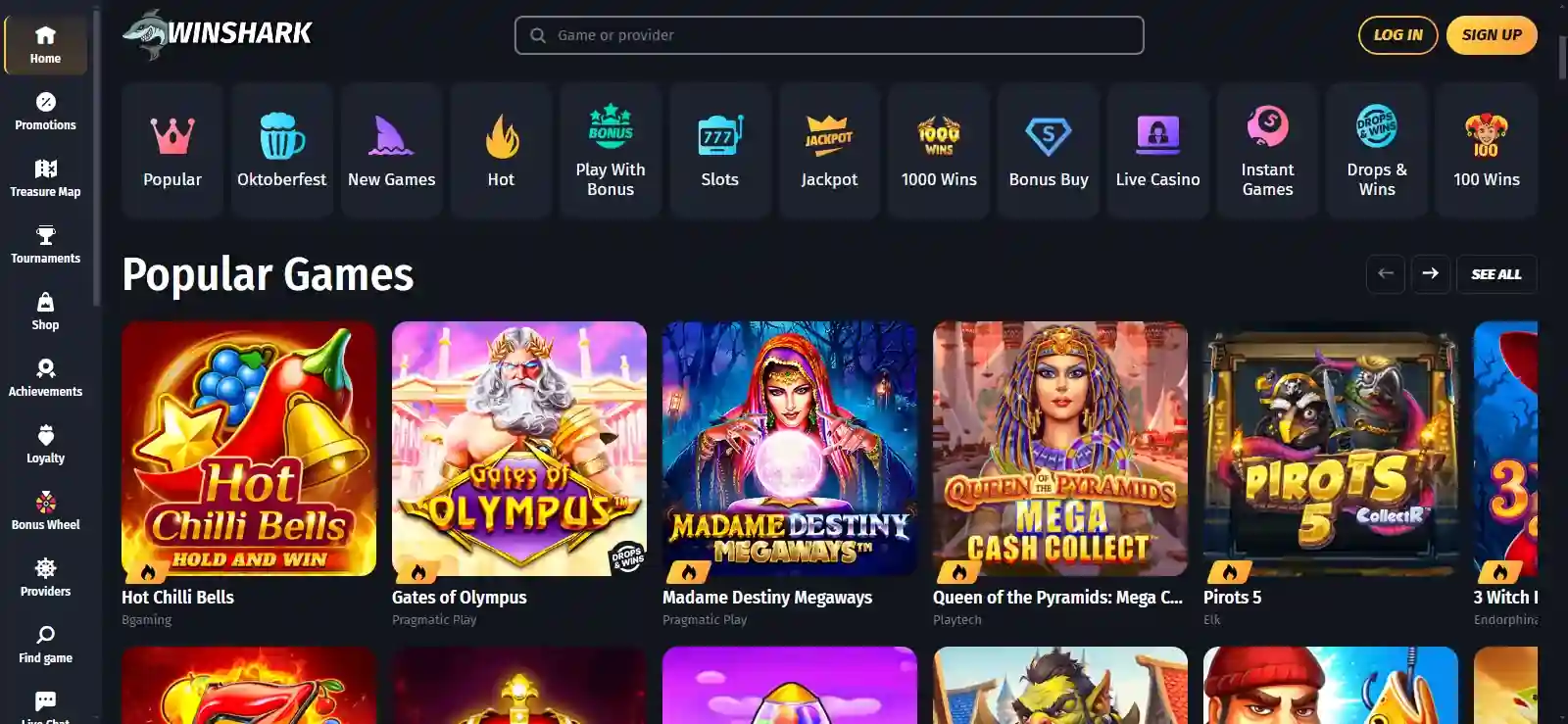
The strongest practical detail sits around cashouts: published terms include transaction and monthly caps, separate AUD figures, processing windows and verification requirements. The games side is broad, but exact catalogue totals vary, so provider coverage and live-dealer depth are more useful anchors than a single headline count.
- Established2024
- Payment modelFiat + crypto
- Live casinoAvailable
- Safer-play controlsSelf-exclusion + reality checks
Table of Contents
- Product breadth comes from a hybrid payment model and a large game mix
- Withdrawal limits shape the cashout experience more than the method list
- Fiat and crypto rails serve different jobs in the same account
- Crypto value check: price movement and transfer costs
- The loyalty programme rewards slot activity differently from table play
- Safer-play controls centre on self-exclusion and reality checks
- Trust signals are mixed across major review platforms
- Provider breadth is clearer than the exact game total
- Common questions about WinShark
- WinShark is broad, while cashout terms deserve the closest reading
Product breadth comes from a hybrid payment model and a large game mix
WinShark has operated since 2024 and combines traditional payment methods with cryptocurrency. Payment options include cards and wallets alongside bank transfer and a sizeable set of digital assets. That hybrid structure matters because the practical costs and risks differ: a bank or wallet transfer is mainly about provider rules and processing, while a crypto transfer also adds network costs, price movement and transaction irreversibility.
Payments are genuinely mixed
Fiat methods listed for WinShark include Mastercard, Rapid Transfer, Paysafecard, Skrill, Revolut, CASHlib, bank transfer, MiFinity, Neteller, Neosurf and BLIK. Country availability can vary, so the useful point is the breadth of rails rather than assuming every method appears in every cashier session.
Crypto is more than a single-coin add-on
Bitcoin, Ethereum, Litecoin, Bitcoin Cash, Tether and Cardano are among the supported assets, alongside USDC, Dogecoin, Solana, XRP, TRON and Toncoin. The presence of many assets does not imply a particular network fee or exchange rate.
Live casino is a substantial category
Live-dealer gaming is a core part of the catalogue, supported by providers that include Ezugi and Playtech alongside a wider mix of slots suppliers. WinShark's own material has described more than 100 live-dealer games.
The overall product is therefore broad on both payments and games, but breadth alone does not tell you how smoothly money moves out. The withdrawal limits and processing rules carry more practical weight because they determine how a larger balance can be split across transactions and days.
A useful way to read a hybrid casino is to separate “choice” from “friction”. Choice is visible in the number of payment routes, crypto assets, providers and live tables. Friction appears later, when a method has its own transfer cost, a cashout is capped, or identity checks have to be completed. WinShark scores strongly on visible choice; the cashout section is where the operational constraints become more concrete. That distinction keeps a long feature list from being mistaken for a guarantee of a fast or inexpensive withdrawal.
Withdrawal limits shape the cashout experience more than the method list
The base cashout terms repeatedly listed for WinShark are €500 per transaction or 24-hour period and €10,000 per month, or the stated equivalent. A separate AUD listing gives A$900 per day and A$18,000 per month. These are different published frames, so they are better read as the terms attached to their respective currency presentation rather than as a conversion exercise.
| Cashout condition | Listed figure or window | Practical reading |
|---|---|---|
| Base transaction / 24-hour cap | €500 or equivalent | Larger balances can require multiple cashouts. |
| Base monthly cap | €10,000 or equivalent | The monthly ceiling matters independently of individual transaction size. |
| AUD daily listing | A$900 | Useful when reading an AUD-denominated account context. |
| AUD monthly listing | A$18,000 | Shows the scale of the separate AUD presentation. |
| Pending time | 1–5 days | A stated processing window, not a payout guarantee. |
| E-wallet window | 0–24 hours | Listed after processing conditions are met. |
| Bank/card window | 3–5 days | Longer listed route than e-wallets. |
The numbers also show why a single “fast withdrawal” label would be too coarse. An e-wallet can have a shorter listed transfer window than a bank or card route, yet a pending review can sit in front of both. At the same time, the daily cap can matter more than method speed for a larger balance. Someone cashing out A$1,800 under an A$900 daily figure is dealing with at least two daily tranches even before any processing or verification time is considered.
Monthly limits add another layer. Repeated daily withdrawals can eventually meet the period ceiling, so a sequence that looks straightforward transaction by transaction can still stop at the monthly cap. The useful calculation is therefore not merely “how long does one withdrawal take?” but “how many withdrawals are required, what checks can interrupt them, and what period limit applies?”
Why do daily and monthly caps matter together?
A daily cap sets the pace of individual cashouts, while a monthly cap sets the outer ceiling for the period. If a balance is larger than either threshold, the relevant constraint can change over time: first the per-day limit, then the monthly total. That distinction is more useful than a single “withdrawal limit” label.
The listed fee policy does not add a casino-side deposit or withdrawal fee, while payment providers or blockchain networks can still impose their own costs. That separation becomes especially important on crypto rails. A zero casino fee does not make a transfer cost-free when a wallet, exchange, bank or blockchain adds its own charge. For comparisons, it is therefore more useful to separate the casino line item from the full end-to-end cost of moving money.
Fiat and crypto rails serve different jobs in the same account
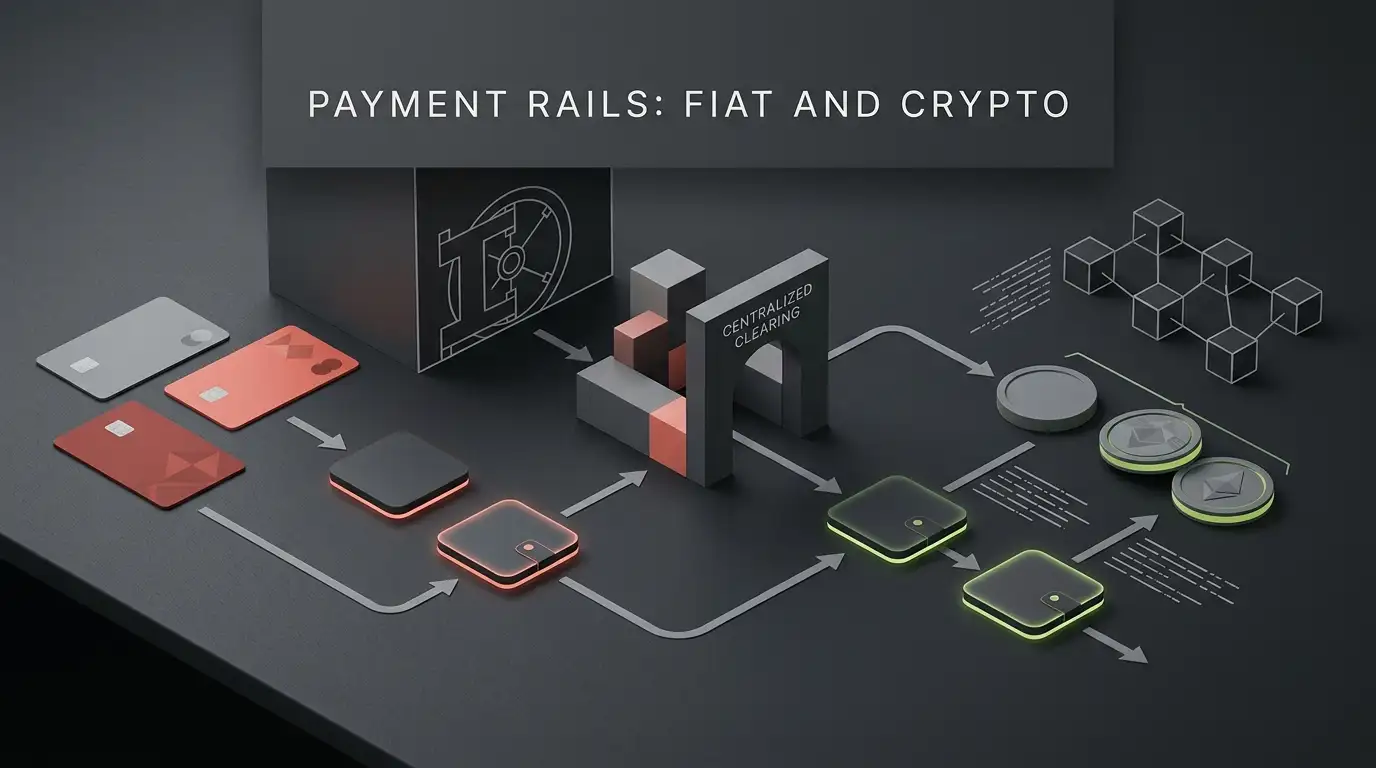
The payment catalogue spans familiar fiat methods and multiple crypto assets. On the fiat side, the payment catalogue includes wallets, prepaid options, bank transfer and Mastercard. On the crypto side, the list covers large-cap assets and stablecoins as well as several additional networks and tokens. A full breakdown sits on the WinShark payment methods page.
Fiat keeps value stable during the transfer itself
A dollar-denominated amount does not acquire crypto price exposure simply because it is being moved. The trade-off is that bank, card or wallet processing can involve separate provider rules and settlement windows.
Crypto adds movement and network risk
A crypto-denominated transfer can change in AUD value while it is held, and network transactions may be irreversible. Network costs also belong to the transfer rail and should not be confused with a casino fee.
The distinction is why the calculator below asks for user-supplied movement and transfer-cost assumptions. It does not attach an invented fee or exchange-rate forecast to WinShark.
For a crypto route, three values can move independently: the amount of the asset, its AUD price and the network or provider cost of moving it. A stablecoin can reduce one source of market movement but still leaves transfer costs and transaction irreversibility. A volatile asset adds price exposure on top. Keeping those components separate makes it easier to see whether a change comes from the casino account, the payment rail or the asset itself.
Scenario calculator
Crypto value check: price movement and transfer costs
Use your own assumptions to see how a crypto value can change after a price move and two transfer-cost inputs. The figures below are examples for a reader scenario, not WinShark charges or a market forecast.
Illustrative default: A$500. Enter any non-negative scenario value.
Illustrative default: −10%. This is your scenario, not a prediction.
Illustrative default: A$5. This is not a stated WinShark fee.
Illustrative default: A$5. This is not a stated WinShark fee.
Scenario result for BTC
- Ending value
- A$440.00
- Calculated exposure
- A$60.00
- Exposure vs starting value
- 12.0%
Moderate exposure. In this scenario, the combined price movement and transfer-cost inputs reduce the ending value by more than 5% and no more than 15% of the starting value.
A negative exposure figure means the scenario ends above the starting value after the entered movement and costs.
How this works
Ending value = max(0, starting value × (1 + price movement ÷ 100) − inbound cost − outbound cost). Calculated exposure = starting value − ending value. The movement and cost inputs are reader scenarios: they are not WinShark charges, a forecast or investment advice.
The loyalty programme rewards slot activity differently from table play
WinShark describes automatic enrolment into a five-level loyalty programme. The earning mechanic is activity-specific: real-money slot wagers earn loyalty points or coins, while table games, live-dealer play and wagers made with bonus funds do not count under the brand's published explanation.
- Entry
- Automatic enrolment described by WinShark.
- Main structure
- Five VIP levels.
- Counts toward points
- Real-money slot wagers.
- Does not count
- Table games, live-dealer games and bonus-fund wagers.
That split changes the value of the programme depending on what someone plays. A player focused on live dealer tables may use the same product but accumulate loyalty progress differently from someone whose activity is concentrated in slots. The VIP and loyalty mechanics page keeps the cashback listing separate from these earning rules.
The five-level structure can also create a misleading impression if the qualifying activity is skipped over. Two people with the same total gambling spend can progress differently when one spend is concentrated in eligible real-money slots and the other is concentrated in live or table games. The mechanics therefore matter more than the number of levels: earning rules determine whether ordinary play actually contributes to progression.
Safer-play controls centre on self-exclusion and reality checks
WinShark supports self-exclusion through a request to support and also has reality-check functionality. Those controls address two different behaviours: exclusion creates a hard stop on access, while a reality check interrupts a session with an elapsed-play reminder.
- Self-exclusion: designed for a deliberate break from gambling access rather than a short session reminder.
- Reality checks: create a point to reassess elapsed time and whether continuing matches the limit set before play.
- Personal limits still matter: money allocated to gambling should be treated as money that can be lost, not as a route to income or recovery.
What makes a reality check useful?
Time can become harder to track during repetitive play. A reality check is most useful when it connects to a decision made in advance, such as ending a session after a set period rather than merely acknowledging the reminder and continuing automatically.
For confidential support in Australia, Gambling Help Online is available at gamblinghelponline.org.au and on 1800 858 858. The same support details appear in the footer so they remain accessible without being tied to any product feature.
Trust signals are mixed across major review platforms
Third-party profiles do not reduce neatly to one score. Casino Guru lists a Safety Index of 8.6 with the label “High”, while its user feedback is “Mixed” across 15 reviews. AskGamblers shows an editorial score of 7.1/10 and a player rating of 7.7/10 from 15 reviews, with three complaints shown as resolved and an average complaint response of about three days.
Trustpilot provides a different warning signal: the WinShark rating is unavailable because of a guideline breach, and the platform says it removed a number of fake reviews. That moderation action is worth separating from ordinary positive or negative player sentiment because it concerns the integrity of the review pool itself.
The practical reading is to avoid treating any single platform score as a complete safety judgement. Complaint handling, withdrawal terms, verification friction and review-platform moderation describe different parts of the experience. They can sit beside one another without producing one universal rating.
Provider breadth is clearer than the exact game total
The catalogue consistently includes major suppliers such as Pragmatic Play, Play'n GO, Quickspin, BGaming, Yggdrasil, Ezugi, Playtech and Spribe. The exact total is less settled: WinShark describes a catalogue of thousands of games. Titles can be added, removed or filtered, so the total is a changing measure of catalogue size.
Provider breadth is often the better way to understand a catalogue because it says something about variety without pretending the library is static. A casino can add or remove titles while still retaining the same core suppliers and categories. Here, the named mix covers mainstream slot studios, live-dealer specialists and fast-game suppliers, which is enough to establish a broad catalogue shape even when the headline total changes.

For someone comparing game choice, provider names and category depth are more durable signals than a total that can change as titles are added or removed. The WinShark games guide maps those providers and live-dealer coverage without forcing the catalogue into a single disputed number.
Common questions about WinShark
What kind of casino is WinShark?
WinShark is a hybrid online casino established in 2024. Its payment mix includes both conventional fiat methods and cryptocurrencies, alongside slots, live-dealer games and a loyalty programme.
What withdrawal limits are listed for WinShark?
Base terms list €500 per transaction or 24 hours and €10,000 per month, or equivalent. A separate AUD listing gives A$900 per day and A$18,000 per month. Processing windows are separate from those caps.
Does WinShark support cryptocurrency?
Yes. WinShark supports Bitcoin, Ethereum, Litecoin, Bitcoin Cash, Tether and Cardano, alongside additional crypto assets. Crypto values can move sharply and transfers may be irreversible.
Does WinShark have live-dealer games?
Yes. Live casino is a core category, and WinShark has described more than 100 live-dealer games. Providers in the wider catalogue include Ezugi and Playtech.
What safer-play controls does WinShark offer?
Self-exclusion and reality-check functionality are available. For free and confidential support in Australia, Gambling Help Online is available at gamblinghelponline.org.au or 1800 858 858.
WinShark is broad, while cashout terms deserve the closest reading
WinShark combines a wide provider mix, live-dealer coverage, fiat and crypto payments, and a structured loyalty programme. The clearest trade-off sits on the money-out side: daily and monthly caps, processing windows and verification requirements can shape the experience more directly than the length of the method or game list. The mixed third-party trust picture reinforces the value of reading those concrete operating terms separately from platform scores.